
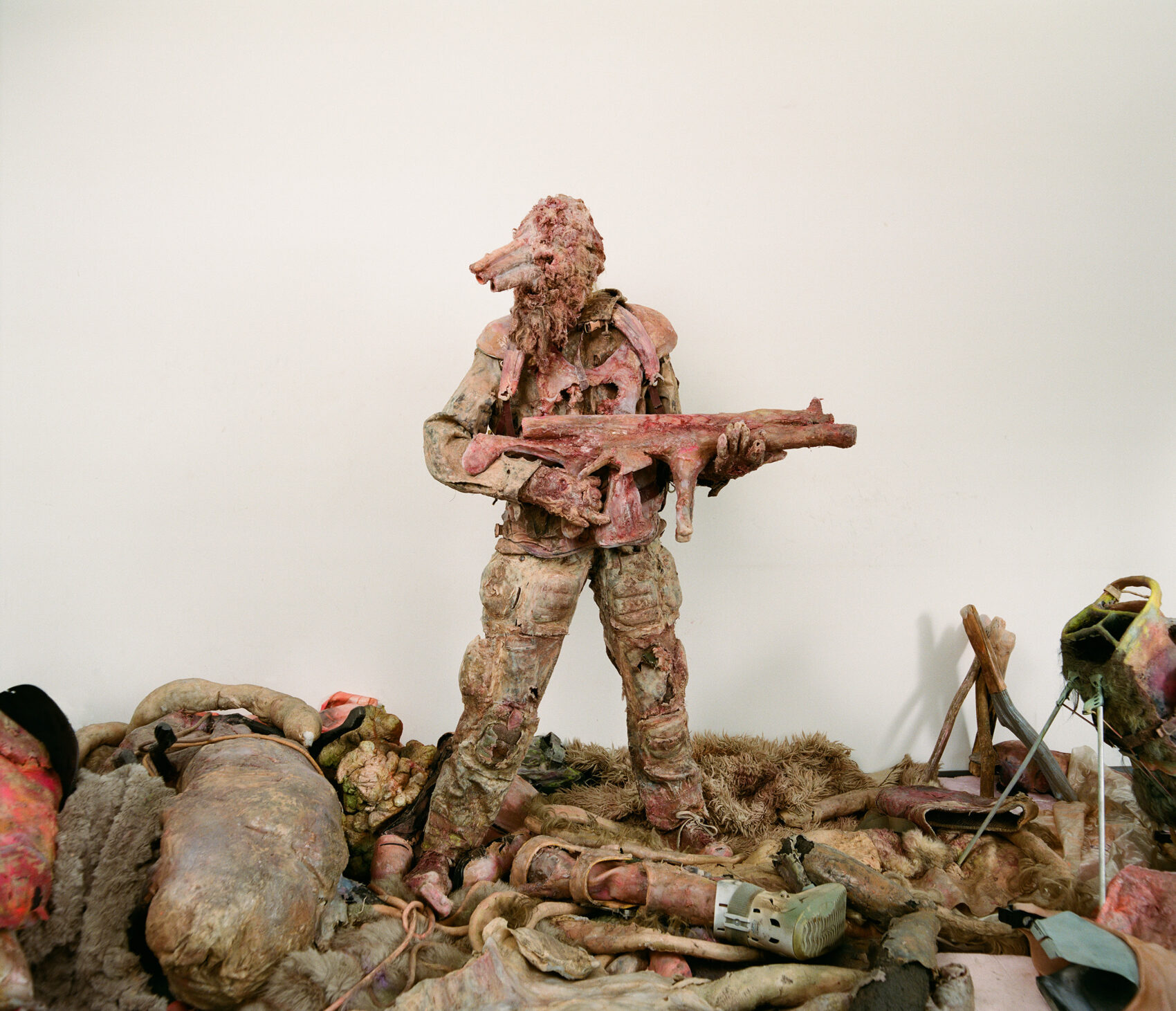
For two months (December – January), the Barbour Gallery in Jerusalem serves as a living creative space; artist Moran Sendrowitz is working on a performance and a new series of sculptures there.
The exhibition is part of an ongoing study of the transformative and exposed body as a political, emotional, and material space.
Visitors are invited to become partners in the creative process in real time, to get to know the raw processes behind her works, and to take part in performance events that will take place during the exhibition.
Through the material language, the bodies simultaneously become sites of testimony and zones of disruption – between vulnerability and survival, between cruelty and mercy. The sculptures consist of hybrid anatomies, incomplete bodily forms – decomposed and fluid bodies – that are in a constant process of changing shape.
This is a kind of “forensic fiction” research journey into the history and trauma hidden behind the objects she finds.
Combined with materials such as silicone, industrial waste, and organic materials such as wood, bone, and hair, as well as synthetic body augmentations, bodies are created that resist classification and definition.
At the center of her work is the body as a space in which opposing forces operate simultaneously. The victim and the attacker meet in one body and become each other in an endless cycle.
In a series of images that examine what she calls “the politics of the gaze” – the possibility of the object to look back, she seeks to undermine normative perceptions, while investigating relations of power, presence, and empowerment within social and cultural spaces.


